
Vietnam is a land of vibrant culture, deep-rooted traditions, and a strong sense of community. One of the best ways to experience this rich heritage is through Vietnamese traditional festivals and holidays. Celebrated across the country, these events are more than just time off work — they are expressions of gratitude, unity, and cultural identity. Whether you’re a local or a visitor, participating in these festivals offers a deeper connection to Vietnam’s soul.
Why Vietnamese Traditional Festivals and Holidays Matter
Festivals in Vietnam are not only a time for celebration but also an opportunity for spiritual reflection, family reunions, and honoring ancestors. Most festivals are based on the lunar calendar and are tied closely to agricultural life, Buddhism, and Confucian values. These cultural events often include traditional music, folk games, special foods, costumes, and ceremonial rituals passed down for generations.
Understanding Vietnamese traditional festivals and holidays gives travelers a deeper appreciation of the country’s customs and helps promote cultural preservation in an increasingly modernized world.
1. Tet Nguyen Dan (Vietnamese Lunar New Year)
Tet, or Vietnamese Lunar New Year, is the most important holiday in Vietnam. It usually falls between late January and mid-February, depending on the lunar calendar.
Significance: Tet marks the arrival of spring and a new year. It’s a time to honor ancestors, clean the house of bad luck, and welcome a prosperous beginning.
Traditions Include:
- Cleaning and decorating homes with peach blossoms or kumquat trees
- Visiting relatives and offering “li xi” (lucky money) to children
- Preparing traditional foods like banh chung, gio lua, and pickled vegetables
- Fireworks, dragon dances, and prayers at pagodas
For foreigners, experiencing Tet is a once-in-a-lifetime cultural immersion. However, it’s also a quiet time in cities as many people return to their hometowns, and businesses may close for several days.
2. Mid-Autumn Festival (Tet Trung Thu)
Celebrated on the 15th day of the 8th lunar month, Mid-Autumn Festival is one of the most enchanting traditional holidays in Vietnam.
Significance: Originally an agricultural celebration marking the end of the harvest, it’s now mainly known as a children’s festival.
Traditions Include:
- Kids parading with colorful lanterns
- Eating mooncakes filled with lotus seeds, egg yolks, or mung beans
- Lion and dragon dances in the streets
- Family reunions and storytelling under the full moon
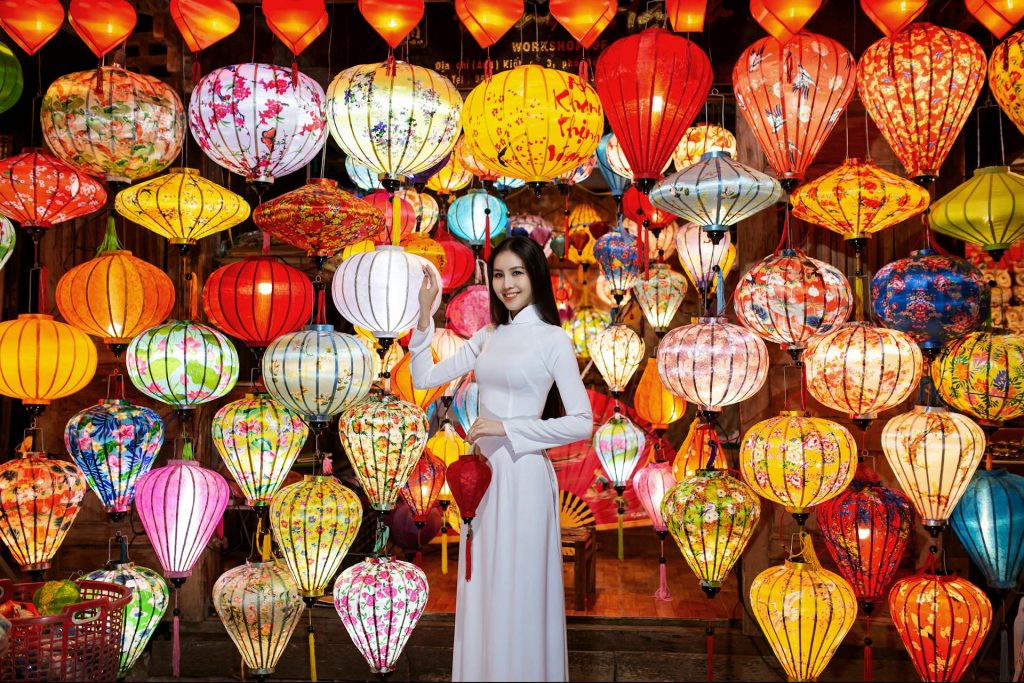
Foreign visitors often find Mid-Autumn Festival to be magical and festive, especially in ancient towns like Hoi An, where lanterns light up every corner.
3. Hung Kings’ Temple Festival (Gio To Hung Vuong)
Celebrated on the 10th day of the 3rd lunar month, this festival honors the Hung Kings, the legendary founders of Vietnam.
Significance: It’s a day to show national pride and remember the origins of the Vietnamese people.
Traditions Include:
- Pilgrimages to the Hung Kings’ Temple in Phu Tho Province
- Offerings of food, incense, and prayers
- Folk games, traditional music, and cultural performances
This is one of the few festivals recognized as a public holiday, and it reflects Vietnam’s strong sense of historical continuity and national unity.
4. Vu Lan Festival (Ghost Festival / Mother’s Day of Vietnam)
Held on the 15th day of the 7th lunar month, Vu Lan is both a Buddhist and familial holiday.
Significance: It honors deceased ancestors and expresses gratitude to parents, especially mothers.
Traditions Include:
- Visiting temples to pray for ancestors and living parents
- Wearing red roses (if your mother is alive) or white (if she has passed)
- Offering vegetarian food and releasing birds or fish as acts of kindness
Foreigners attending Vu Lan often find it to be deeply emotional and spiritually moving. It offers a unique window into the Vietnamese value of filial piety.
5. Perfume Pagoda Festival
This festival begins in the first lunar month and lasts for about three months. The highlight is the pilgrimage to Huong Tich Cave, located in the stunning Perfume Mountains outside Hanoi.
Significance: It’s a major Buddhist event that blends nature, spirituality, and adventure.
Traditions Include:
- Taking a boat ride along the Yen River
- Climbing stone steps and visiting multiple pagodas and shrines
- Praying for health, success, and happiness in the coming year
The journey to the Perfume Pagoda is not only spiritual but also scenic, offering breathtaking landscapes that attract photographers and nature lovers alike.
6. Reunification Day and International Labor Day (April 30 – May 1)
Although not traditional in the cultural sense, these public holidays hold great national importance.
- April 30 (Reunification Day) commemorates the fall of Saigon and the end of the Vietnam War in 1975.
- May 1 (Labor Day) celebrates the contributions of workers.
During this time, cities host parades, patriotic performances, and locals often take short trips, making it an exciting period for tourism.
7. Wandering Souls Day (Tet Trung Nguyen)
Falling on the 15th day of the 7th lunar month, this holiday is similar to All Souls’ Day. It’s a time to honor lost souls who have no one to pray for them.
Traditions Include:
- Preparing offerings of food, paper clothes, and incense
- Visiting pagodas to pray for wandering spirits
- Releasing floating lanterns on rivers
This tradition shows Vietnam’s strong spiritual beliefs and respect for the unseen world, which deeply impresses many foreign visitors.
Tips for Tourists During Vietnamese Traditional Festivals
- Book accommodations early: Popular destinations fill up quickly during major holidays like Tet.
- Expect some closures: Small shops and restaurants may close during Tet, while tourist hotspots like pagodas may be crowded.
- Learn basic Vietnamese phrases to connect with locals and understand cultural nuances better.
- Dress respectfully: When attending ceremonies or visiting temples, modest clothing is appreciated.
Participating in Vietnamese traditional festivals and holidays is not only exciting but also a valuable cultural experience that brings travelers closer to the heart of the country.
Final Thoughts
From the joy of Tet celebrations to the spiritual calm of Vu Lan, each Vietnamese holiday reflects the soul of the nation – rooted in tradition, family, and a respect for both the past and the present. These festivals are not just marked on a calendar; they are lived, cherished, and shared.
For foreign visitors seeking something more than beaches or sightseeing, joining in Vietnamese traditional festivals and holidays is a journey of discovery – one filled with vibrant colors, captivating rituals, and unforgettable flavors.